Building date: 1833
Original use:
Corner structures:
Mortar application and content:
Types and uses of stones:
Types and choice of windows:
Structures with similar masonry details:
Masons who worked on building:
Unique features:
Map views courtesy Google Maps. Address is Google Earth confirmed; 43°16'11.84"N 78°47'59.36"W. Current owner of record, Nochajski as of the 2019 Tax Roll.
Town of Wilson and Niagara County Maps
This is a stone structure and not considered a true cobblestone, although the construction is similar with the exception that cut stones instead of cobblestones were used in the construction. The building date is consistent with the cobblestone construction time period.
The Jesse Smith house was built in 1833 and is known as a Greek Revival style house. Stones for the facing are English cut-stones cut in two with the flat side exposed on the outer wall. They are approximately 4" wide and laid in the same manner as those used in regular cobblestone construction. This home is located on the Maple Road north of Nelson Road.
Fascinating building - haven't seen this particular approach to masonry (stone) construction, where they apparently took natural stones & cut them into dimensional pieces that resemble bricks (from a distance). Another example of individual ingenuity, in using local building materials.
This was certainly labor intensive. Would be fascinating to learn the origins of this house/its original owner's goal & the contractor they worked with. Did they have a supply of natural stone (limestone? Other?) on or near their property - that was available for construction, for a house that they wanted to look like "cobblestone" - as they'd seen it elsewhere? This particular method is much more intensive than making/building with brick. In regards to bricks for construction: many "brickyards" in the 19th century were small production facilities, often on the property of a local farmer, who had a deposit of clay on his property- and set up production right on his farm. The 19th-century plat/Sanborn maps often indicate these localized, farm-sited, brick-making operations. The Town of Brighton, Monroe Co. is a major example of this: brick-making was that municipality's major business thru the early 1900s; today, none of these operations survive.
For this individual to secure natural stone, cut it into "brick"-sized pieces, then build this house is highly unusual. Are all 4 sides of the house built of these brick-sized stones? Is the masonry of this house unique? No matter - it's more important that it's been photographed & catalogued, for documentation. Email 03/24/2020, Cynthia Howk.
This structure is not included in the Roudabush Survey or Wolfish photography collection.
The Cobblestone Society & Museum Tours:
Smith-Hedrich House 6th Annual 06/06/1964
The Land of Cobblestones, by Donald W. Croop 1976, Jesse Smith Page 13, A Publication of the Wilson Bicentennial Committee and Wilson Historical Society, Niagara County, Wilson, N.Y.
Edited publication excerpt about Jesse Smith House, "Cobblestone Homes and Legends Town of Wilson", by Wilson Historical Society.
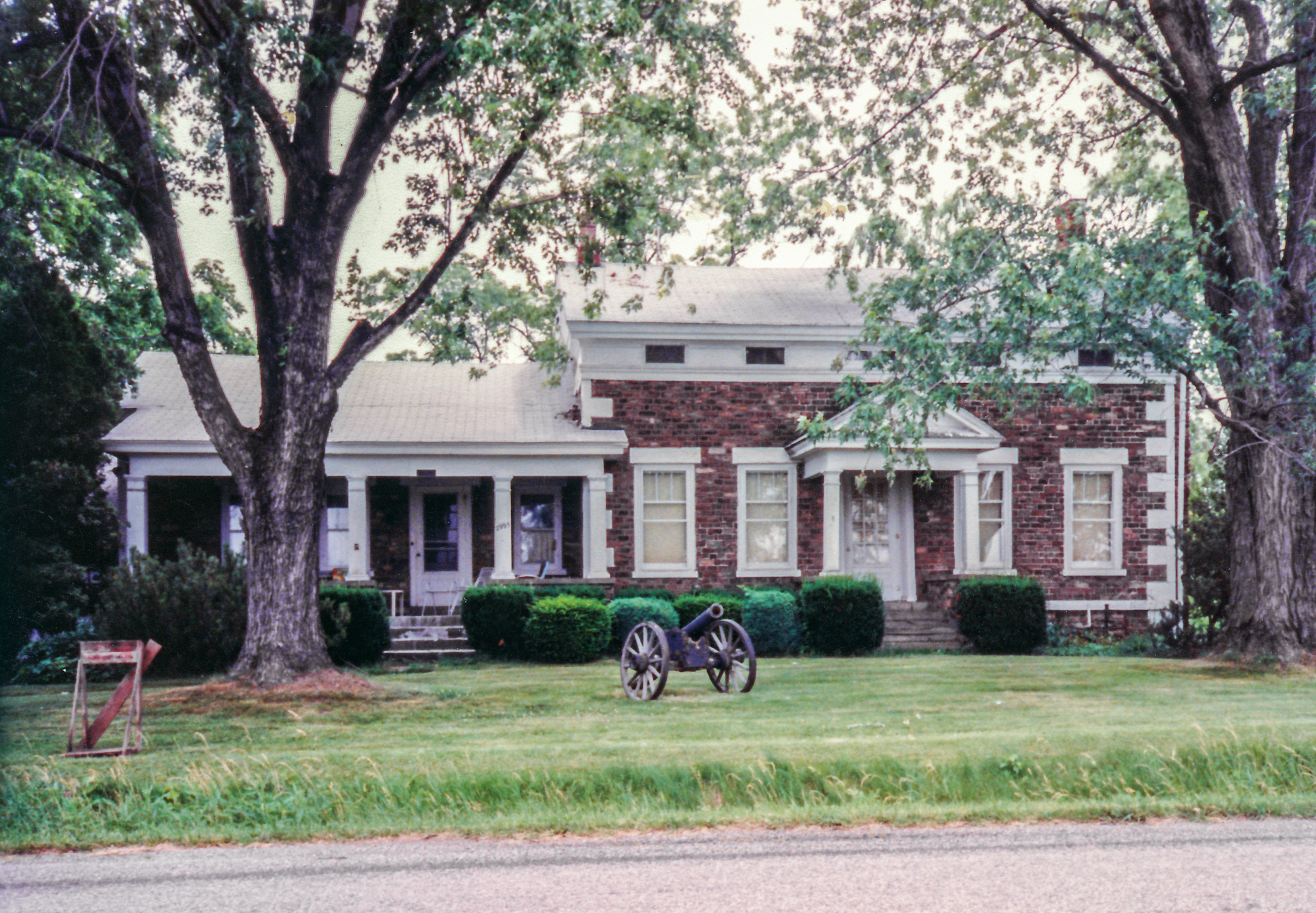 Wil-13 Smith-Hedrich 1.jpg ¹ |
¹ Image courtesy Cobblestone Museum.
